Postpartum Is Not Just Physical
Whether you gave birth six weeks ago or six years ago, your nervous system may still be carrying something from that experience. The body does not heal on a schedule.
By Dr. Christine Lebiecki, D.C. · June 1, 2026
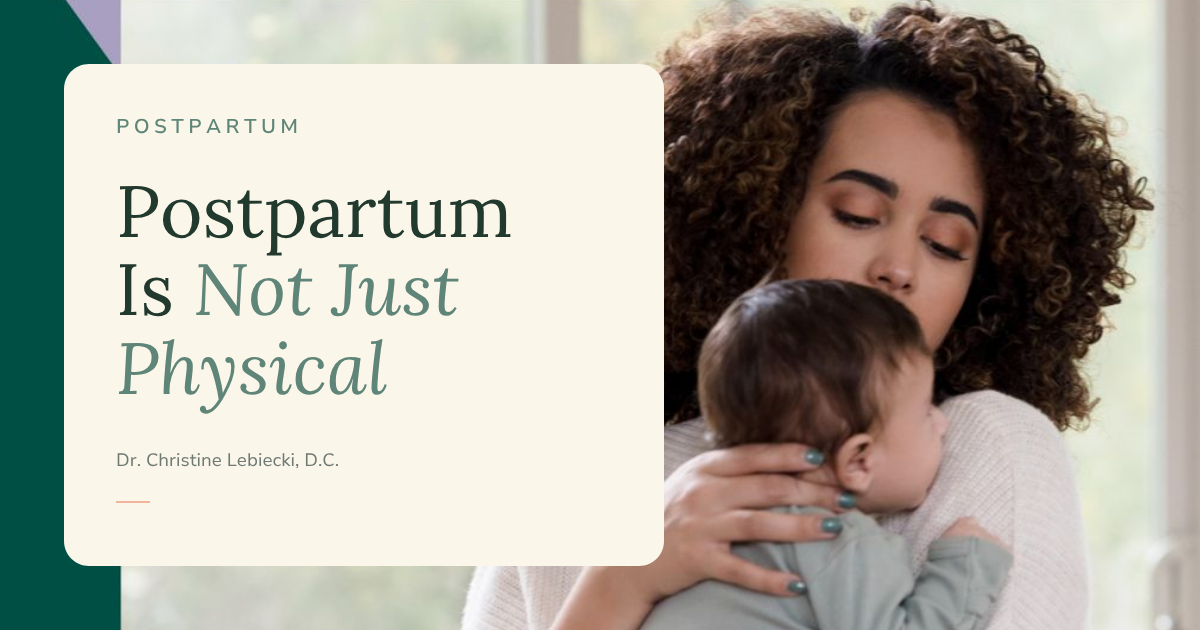
Whether you gave birth six weeks ago or six years ago, your nervous system may still be carrying something from that experience. Postpartum recovery in our culture is measured in weeks and checklists. But the body, especially the nervous system, does not heal on a schedule.
If you are postpartum and still feel like something is off, like you cannot fully relax, like the exhaustion runs deeper than sleep deprivation, like your emotions are unpredictable in ways they never were before, please hear this: you are not failing. Your nervous system is still processing, and it needs a different kind of support than anyone has probably told you to seek.
What Birth Does to the Nervous System
Birth is one of the most profound neurological events a human body experiences. The autonomic nervous system is activated intensely during labor. Stress hormones surge. Oxytocin, prolactin, and cortisol spike and crash in the hours and days that follow. The vagus nerve, which governs bonding, calm, and the parasympathetic response, is significantly engaged through the birth process and then immediately asked to support feeding, attachment, and recovery.
Even in the most straightforward births, the nervous system has been through something significant. In births that involved interventions, complications, or any degree of trauma, the nervous system may have encoded a stress response that remains active long after the physical healing appears complete.
Why the 6-Week Clearance Is Not the Whole Story
The standard postpartum check assesses physical recovery: uterine involution, wound healing, hormonal indicators. It does not assess nervous system function. It does not measure whether the woman is neurologically regulated, whether her spine has recovered from the physical demands of pregnancy and delivery, or whether her body has processed the intensity of birth. Many women leave that appointment cleared for activity feeling more confused than reassured.
Common Signs of Postpartum Dysregulation
Hypervigilance: startling easily, always braced for the next need. Trouble sleeping even when the baby sleeps. A sense of being wired but exhausted. Anxiety or intrusive thoughts. Emotional numbness or disconnection. Pain in the neck, jaw, shoulders, or low back that does not resolve with rest. Digestive irregularity. Difficulty feeling present in your own body. A persistent sense that you have not fully come back to yourself.
How Chiropractic Supports Postpartum Recovery
Postpartum chiropractic care addresses the physical and neurological changes that happen during pregnancy and birth. The pelvis, sacrum, and lumbar spine are significantly affected by the structural demands of carrying and delivering a baby. These areas are also central to nervous system regulation, and misalignments here can directly affect how well the body shifts from sympathetic activation to parasympathetic rest.
Gentle, specific adjustments restore alignment, reduce stored tension in surrounding soft tissue, and support the vagus nerve’s ability to facilitate calm and connection. Dr. Christine works with postpartum women regardless of how much time has passed since birth. There is no deadline on healing. It is never too late to support the body’s completion of that process.
You were cleared at 6 weeks. But your body is still healing. Your nervous system is still asking for something. And you deserve care that sees that.
Postpartum healing does not end at 6 weeks. Call Family First Chiropractic.
Or call (802) 860-0382