Is Chiropractic Safe During Pregnancy? A Colchester Answer
Yes, with the right training and the right modifications, and here is exactly what that means.
By Dr. Christine Lebiecki, D.C. · April 1, 2022
Someone told you to be careful. Maybe it was a family member, maybe it was a thread you read at two in the morning while your hips ached and you could not get comfortable. Either way you are here because you want a straight answer, not a debate.
So here it is. Chiropractic care during pregnancy is safe when it is delivered by someone trained to deliver it. It is one of the most conservative options available to you for pelvic and spinal discomfort in pregnancy, and it carries no medication exposure for you or your baby. The adjustment itself does not involve your abdomen, your uterus, or your baby. It involves the joints of your pelvis and spine.
That is the short answer. The rest of this post is why it holds.
Who Should Be Adjusting You, and What to Ask
Every licensed chiropractor receives baseline training in caring for pregnant patients. But baseline is not the same as focused. If you want someone whose practice is actually built around this, look for three specific things.
ICPA membership. The International Chiropractic Pediatric Association is the body that sets the standard for pregnancy and pediatric chiropractic in this field.
CACCP certification. This is a multi-hundred-hour postgraduate program in pregnancy and pediatric care with written and practical examinations behind it. It is not a weekend seminar.
Webster Technique certification. Webster is a specific analysis and adjustment of sacral alignment and the soft tissue and ligaments that attach to the pelvis. It is the single most relevant technique in prenatal chiropractic, and certification means the provider has been formally trained and tested in it.
I hold all three at Family First Chiropractic in Colchester, Vermont. You are allowed to ask any provider for the same, and a good one will answer happily.
Safety in pregnancy care is not a feeling. It is training, modification, and knowing the moment to send you somewhere else.
How the Table and the Technique Actually Change
This is the part most people have never had described to them, and it is usually where the fear dissolves.
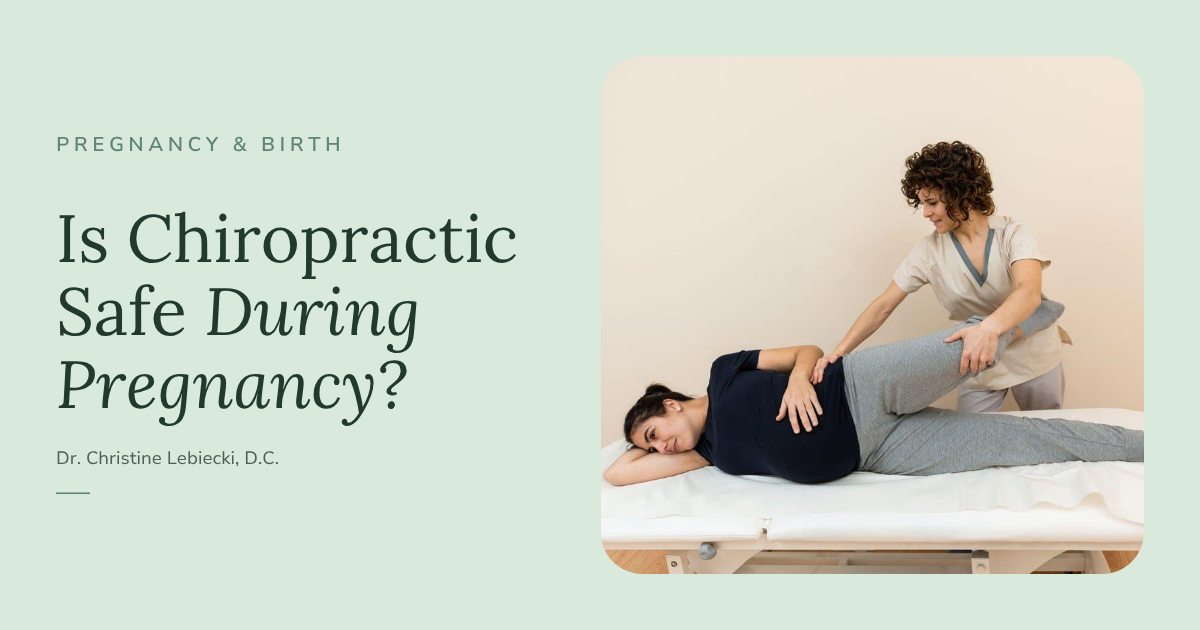
You are never asked to lie flat on your stomach. Tables built for prenatal care have sections that drop away and adjustable cushioning so your belly is supported, not compressed. Some visits are done side lying instead, which is often the most comfortable position in the third trimester.
The force changes too. Pregnancy floods your body with relaxin, a hormone that deliberately loosens ligaments to prepare the pelvis for birth. Your joints move more easily than they did a year ago, which means they need less to move them. Prenatal adjustments are lower force and more specific, not stronger. Rotational moves through the lower back and abdomen are not used.
When Chiropractic Is Not the Right Call
An honest safety post has to include this part.
Call your OB or midwife first, not me, if you have vaginal bleeding, leaking fluid, severe or rhythmic cramping, a sudden severe headache with visual changes or swelling, or noticeably decreased fetal movement. Those are obstetric questions and they are urgent. Chiropractic is not the intervention.
There are also conditions, placenta previa and preeclampsia among them, where I will want to coordinate with your provider before we proceed or modify what we do. That coordination is normal and it is not a red flag. I am glad to talk directly with your OB or midwife, and many Colchester families prefer that we do.
The Fears People Walk In With
Will it hurt the baby. No. Nothing about the adjustment reaches or presses on your baby.
Will it make me go into labor. Adjusting the pelvis does not induce labor. It addresses joint restriction and ligament tension.
Will it turn a breech baby. No, and be cautious of anyone who says it will. Webster addresses pelvic and sacral alignment. Some patients find that a baby has more room to move afterward, but the technique is not a repositioning procedure and it should never be described as one.
Is my neck safe. Yes. Cervical care during pregnancy is routine and is adapted to your comfort.
Come Ask the Rest of Your Questions
If your concern is safety, you have now read the honest version of it. If your question is what care actually looks like month to month, what it addresses and how often people come in, that is covered in detail in prenatal chiropractic care in Colchester.
And if you would rather ask a person than a webpage, that is what a consultation is for. Bring the thread you read at two in the morning. We will go through it together.
Contact our Colchester chiropractic team at Family First Chiropractic today.
Or call (802) 860-0382